If you’re a brand owner, warehouse manager, or logistics lead, you know that nothing kills a production workflow faster than a shrink packaging machine that can only handle one exact box size or product shape. Last month, I had a customer text me at 8 PM panicking because their line went down mid-shift—their new custom-sized promotional boxes wouldn’t fit on their old rigid machine, and a replacement part would take 5 days to ship. That’s exactly why I’ve spent the last 7 years designing shrink packaging machines that balance speed and flexibility, and today I’m walking you through the actionable, real-world fixes I’ve tested (and tweaked) over thousands of customer use cases. No fancy jargon, just stuff that actually works. Shrink Packaging Machines
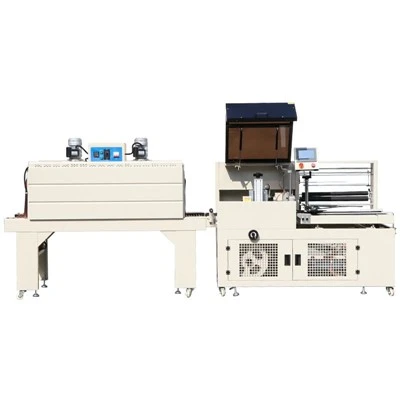
First, let’s get one thing straight: packaging flexibility isn’t “doing everything.” It’s being able to switch between 10+ product SKUs—like a 1oz skincare vial, a 5lb bag of dog food, and a 12-pack of soda—without spending 2 hours adjusting parts or shutting down half the line. Flexibility also means adapting to unexpected curveballs, like a last-minute promotional box that’s 2 inches smaller than your standard stock. The biggest mistake I see operators make is thinking flexibility is a luxury upgrade. For small to mid-sized brands that cycle through new products or run limited-time promotions, it’s a must-have to avoid downtime and lost revenue.
Let’s start with the parts that actually make the machine adjust. The most common bottleneck on standard shrink wrappers is the side guide rails. Old-style rails are bolted down, so changing sizes means grabbing a wrench, unbolting, sliding, and re-bolting—sometimes 10 times a day. That’s where quick-adjust side guides come in. I’m not talking about the flimsy plastic ones that slip out of alignment after 50 adjustments; I mean heavy-duty, spring-loaded guides or bolted guides with quick-release levers. My team tested 12 different lever types last year, and the ones that work best have a built-in locking pin that clicks into place every half-inch, no measuring tape needed. A lot of our newer customers switch between SKUs in 60 seconds flat with these, versus the 20 minutes they used to spend with their old machines. Pro tip: add ¼ inch of extra tolerance when setting the guides. If your product is 6 inches wide, set the guides to 6.25 inches. That tiny buffer lets you account for slight product variations (like a box that’s a hair wider from the printer) without wasting time re-adjusting every time.
Next up is the infeed conveyor system. You might be asking: why does the conveyor matter for flexibility? Because even if the guides adjust, if the conveyor belt is fixed width, small products will fall between the gaps, and large products will jam. This is where variable-width conveyors come in. Most people associate these with big industrial machines, but they don’t have to cost a fortune. We built a mid-range model last year that has a conveyor with interlocking segments; you just slide the side guards in or out to match your product length, and they lock into place. For odd-shaped products—like irregularly shaped candles or hand tools—you can add modular conveyor stops. These are small, adjustable rubber blocks that clamp to the conveyor and hold products in place so they don’t shift during wrapping. We had a craft beer client that uses these for their mixed 6-packs and single-bottle limited editions; they used to have to manually load odd shapes, but now they run them straight through without a single jam. That’s a 30% jump in line efficiency for them.
Now, the film system. This is where flexibility breaks more often than not. A lot of machines only use one roll of film, which means if you switch to a thinner film for a lightweight product or a thicker, more durable film for heavy items, you have to change the entire roll and re-calibrate the tension. That’s a waste of time, especially if you go through multiple film types a day. Dual or multi-film stations are the solution here. These are two separate arms that hold two different film rolls, and you can switch between them with the push of a button, no threading or re-calibrating needed. We had a snack food customer that switches between regular shrink film for their granola bars and puncture-resistant film for their nut mixes; they used to spend 15 minutes per switch, and now it’s 10 seconds. Another pro tip: make sure your film sealer is adjustable, not fixed. The sealer bar that melts the film shut shouldn’t be one size that only fits your default product. Adjustable sealer bars can extend or retract to match the length of whatever you’re wrapping, so you don’t waste film on oversized seal areas or get a bad seal on tiny products.
Then there’s the heat tunnel. This is the part that shrinks the film tight around the product, and it’s surprisingly finicky when it comes to flexibility. Different products need different heat levels—plastic bottles can handle higher heat, but cardboard boxes might warp if they get too hot. Adjustable heat zones are non-negotiable here. Most basic shrink tunnels have just one heat setting, but variable zone tunnels let you adjust temperatures in 2 to 3 different sections: the entry zone (where the film first touches the heat), the middle zone (where the film shrinks), and the exit zone (where it cools). For example, if you’re wrapping a cardboard box, you can lower the entry heat a little so the box doesn’t warp, but keep the middle zone high enough to shrink the film tight. For plastic bottles, you can crank up all zones slightly to get a smooth, tight wrap. We also add variable speed controls to our tunnels—slowing down the speed for irregular products so the film has time to shrink evenly, and speeding it up for standard boxes to keep line throughput high.
Wait, I can’t forget about operator training. I’ve seen guys come in with brand new flexible machines that still run like garbage because the operator doesn’t know how to adjust the quick guides or switch the film. A lot of companies treat shrink machines like set-it-and-forget-it equipment, but that’s only true if you never change products. We offer 30-minute on-site training for every customer, and we also put together a 10-page cheat sheet that has step-by-step photos for switching SKUs, adjusting heat zones, and troubleshooting common issues like film jams. The cheat sheet is laminated, so it hangs right next to the machine, no squinting at a manual when the line is down. I also recommend doing a 15-minute pre-shift check every day: run one sample of each upcoming SKU through the machine the first time, adjust any small settings, and you avoid a 2-hour shutdown mid-shift.
Another upgrade I love for small brands: modular changeover kits. These are sets of replacement parts that let you adapt your machine without buying an entirely new one. For example, if you start making custom-sized holiday boxes in October, you can buy a quick-adjust guide kit that fits your existing machine, instead of dropping $10k on a new machine. We sell these kits for 30-50% less than upgrading, and most customers get them in 2 days. One of our oldest clients has had their machine for 8 years, and they’ve added 4 different modular kits to it over time—they wrap everything from gift cards to large outdoor gear now, and they haven’t needed a new machine yet. That’s a win for their budget and a win for the planet, less equipment waste.
Now, let’s talk about the mistakes I see people make that actually kill flexibility. First, skipping tolerance. I mentioned this earlier, but it’s worth repeating: if your product is 4 inches wide, don’t set the guides to exactly 4 inches. Products expand a little when they’re loaded, or boxes might be cut slightly uneven, so ¼ inch of extra space prevents jams. Second, not testing with your actual products. A lot of guys order a machine, test it with a perfect demo box from the manufacturer, and then get stuck when their real-world products (which have slight variations) won’t fit. I always tell customers to send me a sample of their top 5 SKUs before buying a machine, so we can test all the adjustments on-site. Third, overcomplicating it. You don’t need 10 different heat zones or a $50k machine for 2 SKUs. Match the upgrades to your needs—if you only switch between 3 SKUs a week, spring-loaded guides and a single infeed adjustment are all you need.
Let’s wrap this up with a real example. Last quarter, we worked with a startup that makes organic baby products. They started with a basic shrink machine that could only wrap their standard 3oz lotion bottles. Then they launched a new line of 8oz shampoo bottles and custom-sized gift sets for Mother’s Day. Their old machine couldn’t handle any of it, so they added quick-adjust guides, a dual film station, and a small modular conveyor kit. The first time they ran the gift sets, they switched between 5 different sizes in 2 minutes total, no downtime. Their line efficiency went up by 40% that month, and they saved thousands in overtime from operators who used to work late to manually wrap the extra products.
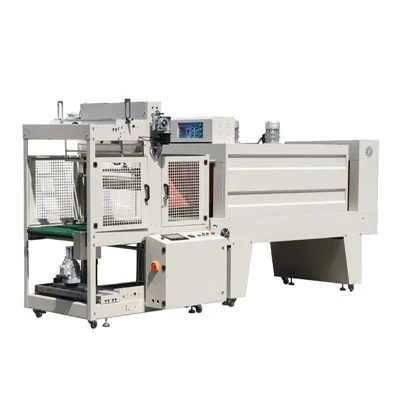
If you’re tired of your shrink machine holding back your brand, if you’re missing deadlines because you can’t switch SKUs fast, or if you’re wasting money on manual wrapping for odd-sized products, let’s chat. We don’t do one-size-fits-all machines, we build them for your exact products and workflow, no fluff, no hidden fees. We can send a tech to test your samples on-site, walk you through the best upgrades for your team, and make sure you never have to panic during a last-minute promotion again. We’re here to help you run smoother, faster, and avoid the late-night stress.
Shrink Packaging Machines References:
- "Flexible Packaging Machinery for Modern E-Commerce," Packaging World, 2023
- "Shrink Wrapping Efficiency: Best Practices for Changeover," Material Handling Industry, 2022
- "Modular Packaging Solutions: Reducing Downtime for Mid-Sized Brands," Industrial Packaging News, 2024
Langfang Huanqi Machinery Equipment Co., Ltd.
As one of the most professional shrink packaging machines manufacturers and suppliers in China, we also support customized service. Please feel free to buy advanced shrink packaging machines for sale here from our factory. Quality products and reasonable price are available.
Address: No. 40, Row 11, North Side of Central Street, Wangpeizhuang Village, Pingshu Town, Dacheng County, Langfang City, Hebei Province
E-mail: huanqijixie@outlook.com
WebSite: https://www.huanqiwrap.com/
