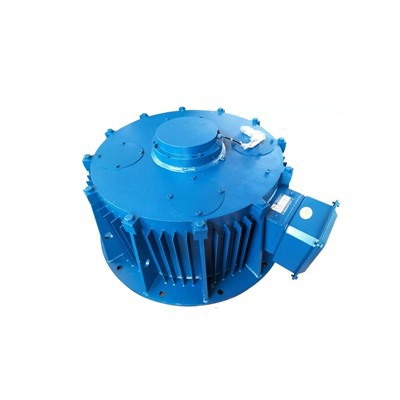
Hey there! As a DC motor supplier, I get asked a lot about how to choose the right gearbox for a DC motor. It’s a crucial decision that can make or break the performance of your application. So, let’s dive into this topic and I’ll share some tips and insights based on my experience in the industry. DC Motor
Understanding the Basics of Gearboxes
First off, what exactly is a gearbox? Well, a gearbox is a mechanical device that uses gears to change the speed, torque, and direction of a motor. When it comes to DC motors, a gearbox can be used to increase the torque output while reducing the speed. This is super important because not all applications need the high – speed output that a DC motor can provide on its own.
There are different types of gearboxes, and each has its own pros and cons. The most common types are spur gearboxes, planetary gearboxes, and worm gearboxes.
- Spur Gearboxes: These are the simplest type of gearboxes. They have straight teeth and are easy to manufacture. Spur gearboxes are great for applications where you need a high – speed reduction and don’t mind a bit of noise. They’re also relatively inexpensive. However, they’re not the best at handling high – torque applications because the teeth can wear out quickly.
- Planetary Gearboxes: Planetary gearboxes are more complex but offer a lot of advantages. They have a compact design, high efficiency, and can handle high – torque loads. They’re made up of a central sun gear, planet gears, and a ring gear. Planetary gearboxes are often used in applications where space is limited and high – performance is required, like in robotics.
- Worm Gearboxes: Worm gearboxes use a worm and a worm wheel to transmit power. They provide a high reduction ratio in a single stage, which means you can get a large decrease in speed with just one set of gears. They’re also self – locking, which can be useful in applications where you need to hold a position without power. However, they’re not as efficient as other types of gearboxes and can generate a lot of heat.
Factors to Consider When Choosing a Gearbox
Now that you know the different types of gearboxes, let’s talk about the factors you need to consider when choosing one for your DC motor.
Torque Requirements
The first thing you need to figure out is how much torque your application requires. Torque is the rotational force that the motor needs to produce to do the job. If you choose a gearbox with a too – low torque rating, the motor will struggle to perform, and it could even burn out. On the other hand, if you choose a gearbox with a much higher torque rating than you need, you’re wasting money and adding unnecessary weight.
To calculate the torque requirements, you need to know the load you’re trying to move and the speed at which you want to move it. You can use some basic physics formulas to figure this out, or you can consult with an engineer.
Speed Requirements
Another important factor is the speed at which you need the output shaft of the gearbox to rotate. Different applications have different speed requirements. For example, a conveyor belt might need to move at a slow, steady speed, while a robotic arm might need to move quickly and precisely.
You need to choose a gearbox that can provide the right speed reduction. The gear ratio of a gearbox determines how much the speed of the motor is reduced. For example, if a gearbox has a gear ratio of 10:1, the output speed will be one – tenth of the input speed.
Efficiency
Efficiency is how well the gearbox can transfer power from the motor to the load. A more efficient gearbox will waste less energy and generate less heat. This is important because it can save you money on energy costs and extend the lifespan of your motor and gearbox.
Planetary gearboxes are generally more efficient than spur and worm gearboxes. However, the efficiency can also depend on the quality of the gearbox and how well it’s maintained.
Size and Weight
The size and weight of the gearbox are important, especially if you’re working on a project with limited space. You need to choose a gearbox that can fit into your application without adding too much bulk.
Planetary gearboxes are known for their compact design, making them a good choice for applications where space is limited. Spur gearboxes can be larger and heavier, especially if you need a high – reduction ratio.
Noise Level
If your application is in a quiet environment, you might want to consider the noise level of the gearbox. Spur gearboxes tend to be noisier than planetary and worm gearboxes because of the way the teeth mesh. Worm gearboxes are relatively quiet, but they can still generate some noise, especially at high speeds.
Matching the Gearbox to the DC Motor
Once you’ve considered all these factors, you need to make sure the gearbox is compatible with your DC motor. Here are some things to keep in mind:
Shaft Size and Type
The shaft of the gearbox needs to match the shaft of the DC motor. You need to make sure the diameter and length of the shafts are the same, and that the type of shaft (e.g., keyed, splined) is compatible.
Input Speed and Power
The gearbox needs to be able to handle the input speed and power of the DC motor. If the motor is running at a high speed and the gearbox can’t handle it, the gearbox could be damaged. You also need to make sure the power rating of the gearbox is high enough to handle the power output of the motor.
Mounting Options
The gearbox needs to be able to be mounted to the DC motor and your application. There are different mounting options available, such as flange – mount and foot – mount. You need to choose the option that works best for your setup.
Real – World Examples
Let’s look at a couple of real – world examples to see how these principles apply.
Example 1: A Conveyor Belt System
Suppose you’re building a conveyor belt system. The conveyor needs to move at a slow speed, say 10 RPM, and it needs to carry a heavy load. You have a DC motor that runs at 1000 RPM.
In this case, you need a gearbox with a high reduction ratio. A worm gearbox might be a good choice because it can provide a high reduction ratio in a single stage and can handle the high – torque load. You also need to make sure the gearbox is efficient because the conveyor will be running for long periods of time.
Example 2: A Robotic Arm
If you’re building a robotic arm, you need a gearbox that can provide precise control and high – speed movement. A planetary gearbox would be a great choice because of its compact design, high efficiency, and ability to handle high – torque loads. You also need to make sure the gearbox is quiet because the robotic arm might be used in a laboratory or other quiet environment.
Why Choose Our DC Motors and Gearboxes
As a DC motor supplier, we offer a wide range of DC motors and gearboxes that are designed to meet your specific needs. Our motors are high – quality and reliable, and our gearboxes are carefully selected to ensure compatibility and performance.
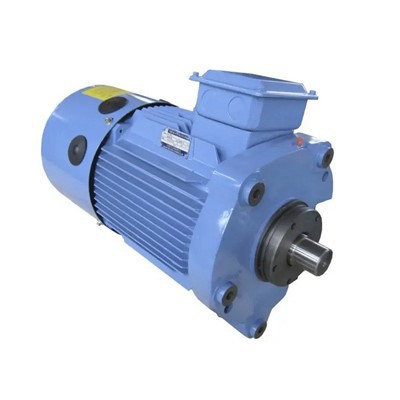
We have a team of experts who can help you choose the right gearbox for your DC motor. Whether you’re working on a small DIY project or a large industrial application, we can provide you with the support and guidance you need.
Brushless Motor If you’re interested in learning more about our products or need help choosing a gearbox for your DC motor, don’t hesitate to get in touch. We’re here to help you make the best decision for your application.
References
- "Mechanical Engineering Design" by Joseph E. Shigley, Charles R. Mischke, and Richard G. Budynas
- "Motion Control Handbook" by Dan Jones
Zibo Auric Mechanical and Electrical Technology Co., Ltd.
As one of the leading dc motor manufacturers and suppliers in China, we warmly welcome you to buy advanced dc motor for sale here from our factory. All customized motors are with high quality and competitive price.
Address: B419, High-tech Entrepreneurship Park, High-tech Zone, Zibo City
E-mail: cui@auricmotor.com
WebSite: https://www.auricmotor.com/
