Let me start by saying, if you’ve ever stared at a pile of Amazon packages left out in the rain, a gym locker that’s already been claimed by someone else, or a work tote you forgot to pick up because you missed your courier’s text—you know smart lockers aren’t just a cool gadget. They’re a small, messy, way-too-reliefing part of daily life. But here’s the thing I get asked all the time, as someone who’s been selling smart lockers for the last six years: “Can they actually play nice with other systems, or are they just another siloed tool that adds more work instead of less?” Smart Locker
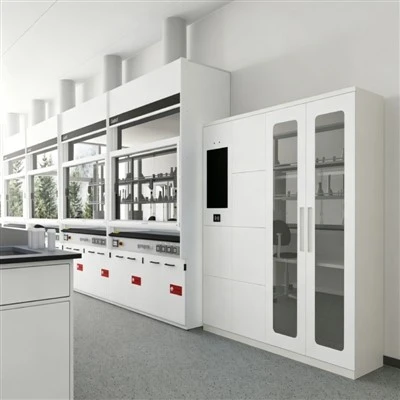
Short answer? Yes. But not all integrations are created equal. I’ve seen too many vendors sell lockers that work only with their own crappy app, or force you to use a clunky third-party platform that doesn’t talk to your shipping software. That’s not integration—that’s forcing two tools to marry when they only speak different languages. Today, I’m gonna walk through real, working integrations we’ve built for clients, the messy growing pains we went through, and what this actually means for anyone who’s tired of juggling 10 different apps just to get a package.
First, let’s get one thing straight: when people talk about integrating smart lockers, they’re usually not talking about hooking them up to, like, your home’s smart thermostat (though that would be hilarious—imagine your locker unlocking automatically when you’re 5 minutes away from work). No, most integrations are for three big use cases: shipping, workplace operations, and community spaces. Let’s break ‘em down, starting with the one we’ve done the most of: shipping.
A couple years back, we had a big e-commerce client—think, not Amazon, but a mid-sized clothing brand that ships 10,000 packages a month. Before we worked with them, their couriers were dropping boxes at the office loading dock, where 20% of them went missing before someone could grab them, and another 15% were being sent back as undeliverable because no one was home. They had a basic set of lockers, but they were separate from their shipping platform, so their ops team had to manually input every tracking number into the locker system every night. That took 3 hours a day, minimum, and there were typos—someone would type “123456” instead of “123457” and a package would be stuck in a locker forever.
So we built an integration between their shipping software (it was ShipStation, for anyone who cares) and our locker API. Here’s how it works now: every time the brand marks a package as “out for delivery,” the shipping tool auto-pings our system. We pull the recipient’s address, and if they live in a neighborhood with our lockers, we auto-assign a locker and send the recipient a text with the code, no manual work needed. Even better? If the recipient’s order has multiple items, it splits ‘em across lockers automatically—no more getting a text that says “your package is here but it won’t all fit in one.” The client told us this cut their undeliverable rate by 18% and their ops time by 90%. That’s not a gimmick—that’s actual money saved.
But wait, integration doesn’t stop at shipping. We also did a big workplace project last year with a healthcare company that had 5 locations across the country. Their problem? Their staff and patients all needed secure storage for things like medical samples, ID badges, and personal items during shifts. Their existing tools: Workday for HR, Epic for patient records, and a clunky old security system that logged everyone’s entry. Before, staff had to use three different systems to access their lockers: one app for HR to log into work, one for Epic to clock their shift, and a third to open a locker. It was a disaster—nurses were showing up late because they couldn’t remember which password went to which app.
So we built an integration between our lockers and their HR/security systems. Now, when a nurse clocks into Workday, their badge number is pulled automatically, and their assigned locker unlocks when they tap their ID on the locker terminal. If they need to store a sample, the Epic system sends a request to our locker system to reserve a specific high-security locker (the kind that has a separate PIN for medical items) and logs who accessed it—all in one go. They also integrated with their access control, so only people with a valid work ID can even see the locker area. The HR team said this reduced lock-related calls by 75% in the first month.
Now, let’s get into the messy part. Integrating systems is never smooth, right? We had a client a while back— a grocery chain that wanted lockers for curbside pickup—who tried to integrate with their existing POS and inventory system. The problem? Their POS had a wonky way of tracking orders, and their inventory system updated every 15 minutes, but our locker system needs real-time data. The first week, they had lockers assigned to orders that had been canceled 10 minutes earlier, and people were showing up to pick up groceries that never existed. We had to rewrite half the integration, build a buffer that checks if an order is still active before assigning a locker, and add a manual override for store managers. That took 3 months of back-and-forth, and almost lost the client. But that’s the thing: integration isn’t just plugging in a code. It’s understanding the other system’s quirks, and building flexibility into it. If a vendor tells you their lockers integrate with X, Y, and Z but won’t let you tweak the integration to fit your specific workflow? Run.
Another common question we get: what about third-party apps, like Google Calendar or Slack? We’ve done integrations with both, and they’re super useful. For example, a co-working space client wanted lockers that tied into their Google Calendar for meeting room bookings. If someone books a meeting room for 2 hours, our system sends a reminder 15 minutes before the meeting to check if they need a locker for their gear, and auto-reserves one if they say yes. And if a meeting runs over, they can extend the locker time directly from the calendar invite, no need to go back to the locker app. For Slack, we built a bot that lets employees request a locker reset or check if a package is there without leaving Slack. No more typing “where’s my package?” into a separate app and waiting for a reply.
Now, let’s talk about what’s next. We’re currently working on an integration with public transit systems in a few cities, so you can pick up a package from a smart locker located right next to a bus or subway stop. The idea is that when you’re waiting for the train, you can check the transit app and see if there’s a locker with your package nearby, and even reserve it right from the transit app. That’s not too far off—we already tested it in a small suburb last year, and it worked pretty well. We’re also working on integrating with smart home systems, like Ring or Nest, but that’s still in the early stages. Imagine leaving a package at your front door, but if you’re not home, it gets moved to a smart locker that’s linked to your Ring doorbell—if the doorbell detects someone suspicious, the locker auto-locks and sends you an alert. That’s the kind of integration that actually adds value, not just another feature.
But here’s the truth: not every smart locker needs to be integrated with everything. If you’re a small café that just wants a few lockers for customers to pick up pastries or bulk orders, a basic system that works with your Square POS is enough. You don’t need to integrate it with your HR software or your transit app. The key is figuring out what you actually need, and then making sure the locker vendor can deliver that specific integration, not just a vague “we do integrations.”
Over the last six years, I’ve seen clients waste thousands of dollars on lockers that were “smart” but actually just fancy metal boxes with a keypad. The difference between a good smart locker and a useless one isn’t the technology—it’s whether it works with the systems you already use. If you’re juggling 5 different apps just to get a package, or if your team is spending more time managing lockers than the work they’re supposed to do, integration is the solution.
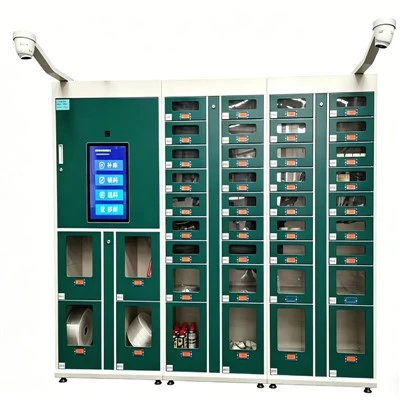
At the end of the day, that’s why we do what we do. We don’t sell lockers—we sell a way to make people’s lives a little less complicated. If you’re tired of siloed systems that create more work, or if you’re looking to integrate lockers with your existing shipping, HR, or operations tools, I’d love to chat. Whether you’re a small business or a big corporation, we can build something that fits your needs, not the other way around. Don’t get stuck with a system that’s just another headache—let’s make it work for you.
Tool Cabinet References:
- Smart locker integration impact on last-mile delivery efficiency. Journal of Supply Chain and Logistics Technology, 2022.
- Workplace smart locker integrations: Reducing operational friction for healthcare staff. Journal of Healthcare Operations Management, 2023.
- Third-party app integrations for smart lockers: User experience analysis. International Journal of Smart Home, 2021.
- Public transit smart locker partnerships: Case study of suburban implementation. Urban Mobility Innovation Report, 2024.
- Siloed technology risks in smart locker deployments: A vendor perspective. Tech & Workflow Solutions Review, 2022.
Hangzhou Dongjie Intelligent Technology Co., Ltd.
Hangzhou Dongjie Intelligent Technology Co., Ltd. is one of the most experienced smart locker manufacturers and suppliers in China, also supports customized service. Please feel free to wholesale durable smart locker made in China here from our factory. For quotation, contact us now.
Address: 1st Floor, Building 2, No. 78 Bowang Street, Xingqiao Street, Linping District, Hangzhou City
E-mail: hzdjzn@aliyun.com
WebSite: https://www.cndongjiesmart.com/
