When I first started working with three phase oil immersed transformers over a decade ago, I spent countless hours troubleshooting units that had failed unexpectedly at job sites. One of the most common issues I saw during those early years was damage from voltage spikes—problems that could have been completely avoided if the over-voltage protection systems had been properly installed and maintained. Back then, I didn’t fully grasp how vital this component is to the overall reliability of a transformer, but over time, I’ve come to see it as nothing less than the unsung hero of any three phase oil immersed transformer. Today, as a supplier of these units for all kinds of commercial and industrial applications, I make sure every client understands exactly what over-voltage protection does, why it’s non-negotiable, and how it protects their investment long-term. Three Phase Oil Immersed Transformer
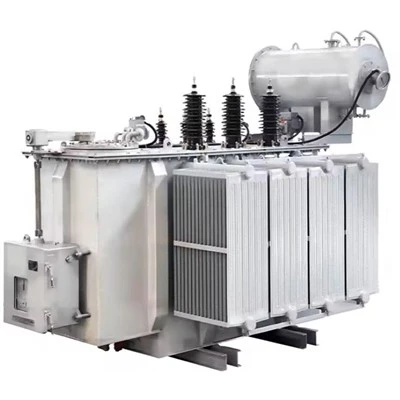
Let’s start with the basics to set the stage. A three phase oil immersed transformer works by transferring electrical energy between two or more circuits through electromagnetic induction, with mineral oil (or sometimes natural ester oil, for more environmentally sensitive sites) serving two core purposes: it cools the internal windings and core, and it insulates those parts from electrical breakdown. This setup is perfect for heavy-duty environments—factories, data centers, mining operations, utility substations—where transformers run 24/7 and handle large loads. But transformers, like all electrical equipment, are vulnerable to sudden surges in voltage that can wreak havoc. That’s where over-voltage protection steps in. At its simplest, over-voltage protection is a system designed to detect and divert excessive voltage away from the transformer, preventing damage to its most critical components: the copper windings, the laminated steel core, and the insulation paper that separates them.
To get into the function, I need to explain the two main types of over-voltage that transformers face, because the protection system is built to address both. The first is internal over-voltage, which comes from within the transformer itself. This usually happens when there’s a switching event—like when a circuit breaker turns the transformer on or off, or when a fault occurs in the connected electrical grid. For example, when a large industrial motor in a factory is turned off suddenly, the energy it was using has nowhere to go, so it creates a surge that travels back to the transformer. Internal over-voltage can also come from resonance, a phenomenon where the transformer’s core vibrations align with grid frequency, amplifying voltage to dangerous levels. The second type is external over-voltage, which comes from outside the transformer. The biggest culprit here is lightning: a direct strike on a power line or a nearby substation can send a massive surge of voltage through the grid that reaches the transformer in milliseconds. Other external causes include grid switching operations by utility companies, or sudden load changes across a large distribution network, like when a big factory shuts down production and drops its load drastically.
Left unaddressed, these over-voltage events can cause permanent damage to a three phase oil immersed transformer. The insulation paper around the windings is rated to handle a specific maximum voltage; when that threshold is breached, the insulation breaks down, leading to short circuits between windings, phase-to-phase faults, or even winding failure. If the core is exposed to repeated surges, it can develop hot spots that degrade the oil over time, reducing its cooling and insulating properties. In severe cases, over-voltage can cause the oil to overheat rapidly, leading to arcing inside the transformer, which is a major fire hazard. I’ve seen transformers that only lasted two or three years because they were hit by a lightning surge that the protection system couldn’t handle, compared to units I supplied 12 years ago that are still running perfectly because their over-voltage systems were sized correctly from the start.
Now, let’s get into how the over-voltage protection actually works on a three phase oil immersed transformer. Most systems we specify for our clients combine two key components: surge arresters (also called lightning arresters) and voltage-sensitive relays, working in tandem. The surge arresters are the first line of defense, installed at the primary side of the transformer, right where it connects to the grid. These arresters are made of metal oxide varistors (MOVs) or silicon carbide (SiC) materials, designed to have a very high resistance under normal operating voltage, so they don’t interfere with the regular flow of electricity. But when voltage spikes occur—like from a lightning strike—the resistance drops instantly, creating a path of least resistance that diverts the excess voltage to ground, away from the transformer. A well-sized surge arrester can handle surges up to tens of thousands of volts, absorbing the surge energy and preventing it from reaching the windings.
The second component, voltage-sensitive relays, acts as a backup and adds an extra layer of protection, especially for internal over-voltage events. These relays monitor the voltage levels on each of the three phases of the transformer, constantly comparing them to the rated operating voltage. If a phase voltage exceeds a pre-set threshold (usually 110% to 120% of the rated voltage, depending on the transformer’s application), the relay triggers two actions: it sends a signal to the circuit breaker to disconnect the transformer from the grid, and it often activates a warning alarm so maintenance teams can investigate the source of the surge before it causes damage. For three phase systems, this is particularly important because an unbalanced surge on one phase can be just as damaging as a full-phase surge, and relays can detect that imbalance in milliseconds, a task that’s much harder to do with only surge arresters.
One thing I always tell new clients is that over-voltage protection isn’t a one-size-fits-all solution. A transformer for a remote mining site, which is exposed to frequent lightning and variable grid load, needs a different protection system than a transformer for a urban data center, where power quality is critical but lightning risk is slightly lower. When we work with a client, the first thing we do is conduct a site assessment to evaluate their specific operating conditions: how far the transformer is from overhead power lines, what the typical load fluctuations are, whether the grid has a history of switching surges, and even local weather patterns that might increase lightning risk. For example, if a client is building a new manufacturing plant in a region with high thunderstorm activity, we’ll recommend a higher-rated surge arrester and add a secondary arrester at the secondary side of the transformer, to protect against surges that come from the plant’s internal machinery.
I also see a lot of clients making the mistake of cutting corners on over-voltage protection to save money upfront, and it’s always a bad call. Last year, we had a client who installed a cheaper transformer from a supplier that didn’t include properly sized over-voltage arresters for their mine site. Within 18 months, a lightning strike took out two of their transformers, leading to three days of downtime that cost them over $2 million in lost production. They ended up reaching out to us to replace the units, and we worked with them to install a custom over-voltage protection system that matched their mine’s specific conditions. That experience stuck with me—there’s no such thing as a small investment in protection, especially when you’re dealing with equipment that powers core operations.
Another key function of over-voltage protection in three phase oil immersed transformers is extending the overall lifespan of the unit. Transformer insulation degradation is a gradual process, accelerated by repeated exposure to over-voltage surges. Even small, frequent surges from grid switching or load changes add up over time, breaking down the cellulose in the insulation paper and reducing its ability to withstand voltage. A good over-voltage system stops those surges in their tracks, keeping the insulation at its optimal level for years. I have transformers in our client base that have been running for 25 years, and the reason they’re still going strong is not just the quality of the oil and windings, but the over-voltage protection that’s been maintained and tested regularly. For us as a supplier, that’s a win-win: our clients get a reliable asset that pays for itself over time, and we build long-term relationships based on trust, not just one-off sales.
It’s also worth noting that over-voltage protection works hand in hand with other transformer maintenance practices, so it’s not a set-it-and-forget-it component. The system needs to be tested regularly, usually during routine transformer inspections, to make sure the surge arresters are working properly. MOVs degrade over time, losing their ability to divert surges, so they need to be replaced every 5 to 10 years depending on operating conditions. The voltage relays also need calibration checks to ensure they trigger at the correct voltage level, so they don’t disconnect the transformer unnecessarily or fail to respond when a surge occurs. As part of our service to clients, we offer annual maintenance checks that include testing the over-voltage system, because even the best system won’t work if it’s not properly maintained.
For anyone in the market for a three phase oil immersed transformer, I can’t stress enough how important it is to prioritize over-voltage protection. Don’t just look at the rated kVA or efficiency rating—ask about the over-voltage protection system: what components are included, how they’re sized for your site, and what maintenance is required. When we design transformers for our clients, we don’t just meet minimum industry standards; we go above and beyond to make sure the over-voltage system matches their specific operating environment, whether that’s a remote rural location, a busy industrial park, or a critical infrastructure site like a hospital or data center.
At the end of the day, the function of over-voltage protection in a three phase oil immersed transformer is simple, even if the technology behind it is complex: it’s the safeguard that keeps your most important electrical asset running, no matter what the grid or Mother Nature throws at it. I’ve spent my career working with these transformers, and I’ve seen firsthand how a properly implemented over-voltage system can prevent catastrophic failure, reduce downtime, and save tens of thousands of dollars in replacement and repair costs. For any business that relies on continuous power, that’s not just a nice-to-have—it’s essential.
If you’re in the market for a new three phase oil immersed transformer, or you’re looking to upgrade the over-voltage protection on your existing unit, don’t hesitate to reach out to us for a consultation. We’ll work with you to assess your needs, design a system that fits your budget and your operating conditions, and make sure you have the protection you need to keep your operations running smoothly for years to come.
Special Transformer References
- IEEE Std C57.12.00, Standard for General Requirements for Liquid-Immersed Distribution, Power, and Regulating Transformers
- NEMA Standard TP 1, Transformers for General Use, Power and Distribution Applications
- Pabst, G., Transformer Overvoltage Protection: Principles and Practices, 2nd Edition, Power Engineering Press, 2018
- American National Standards Institute (ANSI) C84.1, Voltage Ratings for Electric Power Systems and Equipment (60 Hz)
Zhejiang Jiangshan Hengli Electrical Co., Ltd.
Zhejiang Jiangshan Hengli Electrical Co., Ltd. is one of the most professional three phase oil immersed transformer manufacturers and suppliers in China, featured by quality products and low price. Please rest assured to wholesale cheap three phase oil immersed transformer in stock here and get pricelist from our factory. Customized orders are welcome.
Address: 212 Fuzhu Street Sidu Town, Jiangshan, Zhejiang, China
E-mail: henglijs@foxmail.com
WebSite: https://www.henlypower.com/
